Nyla ที่ปรึกษามืออาชีพด้านเว็บไซต์, โมบายแอปพลิเคชัน, เครือข่าย และอินเทอร์เน็ต พร้อมให้บริการพัฒนา Digital Production ครบวงจร ตั้งแต่การออกแบบ พัฒนา ไปจนถึงการดูแลระบบ เพื่อเสริมสร้างธุรกิจของคุณให้ก้าวล้ำในยุคดิจิทัล

Website

บริการออกแบบ Website และ Application โดยทีมงานมืออาชีพทางด้านการออกแบบ Website และ UX/UI ให้เหมาะสมกับภาพลักษณ์ธุรกิจของท่าน


More detail

Web Application

จัดทำ Web Application ให้เหมาะสมกับธุรกิจของท่าน ไม่ว่าจะเป็นระบบสมาชิก ระบบ Cetalog สินค้า ระบบสินค้าคงคลัง หรือระบบที่ท่านต้องการ


More detail

Mobile Application

พัฒนาโดย Flutter ทำให้ท่านสามารถใช้ได้ทั้งระบบ Android และ IOS โดยการทำพัฒนาเพียงครั้งเดียว ตามความต้องการของลูกค้าและ UX/UI ที่สวยงาม


More detail

Solution Development

เหมาะสำหรับธุรกิจของลูกค้าไม่ว่าจะเป็นทางด้านระบบ Network, ระบบ Server ทั้ง Linux และ Windows, IOT รวมถึงระบบ Hardware ต่างๆ


More detail

Nyla Development Team มีเป้าหมายเพื่อสร้างความสำเร็จให้เกิดขึ้นกับธุรกิจของท่าน ด้วยการทำงานอย่างมีประสิทธิภาพในทุกขั้นตอน
และเชื่อมั่นว่าหากลูกค้ามีความก้าวหน้า เราเองก็จะพัฒนาเคียงข้างไปด้วยกัน

Nyla Development
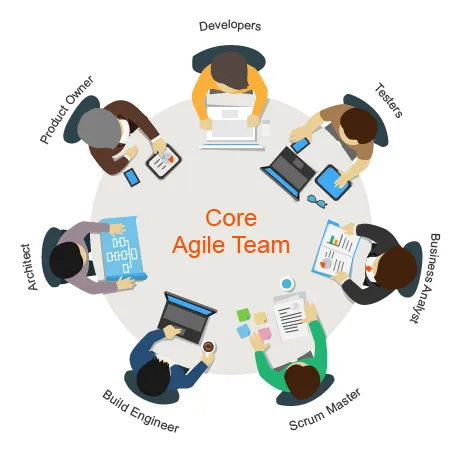
Nyla Development Agile Team

ประสบการณ์ด้าน Internet, Website, Mobile Application กว่า 20 ปี

ทีมงาน Nyla มีประสบการ์ทางด้าน Computer, Internet, Website, Web Application, Mobile Application กว่า 20 ปีทำให้ท่านมั่นใจในผลงานที่ตอบโจทย์ความต้องการของท่าน

มาตราฐานการทำงาน

ใช้ระบบบริหารงานแบบ Agile โดยทีมทำงานมุ่งเน้นประสิทธิภาพและผลลัพธ์

Technology ที่ทันสมัยเหมาะสมกับความต้องการของท่าน

ด้วยประสบการณ์กว่า 20 ปีของเราสามารถแนะนำ Technology ใหม่ๆ ที่เหมาะสมกับงานของท่าน เพื่อประสิทธิภาพที่ดีเยี่ยมและทันสมัย

Our Company

Nyla-dev is specializes in developing websites and mobile applications is a full-service digital agency that provides a wide range of services to help businesses establish and maintain a strong online presence. These services can include website design and development, mobile app development, search engine optimization (SEO), social media marketing, and online advertising.

Such a company typically employs a team of experts in various fields, including web and mobile development, design, and digital marketing. These experts work together to understand the specific needs and goals of a business, and then create a customized solution to help the business achieve its objectives.

The process of working with a digital agency for website and mobile app development typically begins with a consultation, during which the agency's experts will gather information about the business and its target audience, as well as the business's goals and objectives. This information is used to create a detailed project plan and wireframe, which outlines the features and functionality of the website or mobile app.

Next, the design and development of the website or mobile app takes place. The agency's designers and developers will work together to create a visually appealing and user-friendly interface, while ensuring that the website or mobile app is optimized for search engines and mobile devices.

Once the website or mobile app is complete, it must be tested on various devices and web browsers to ensure compatibility and fix any bugs. The agency will also provide training and support to ensure that the business is able to effectively manage and maintain the website or mobile app.

Overall, working with a digital agency that specializes in website and mobile app development can be an effective way for businesses to establish and maintain a strong online presence. The agency's experts will provide a wide range of services to help the business achieve its objectives, while ensuring that the website or mobile app is visually appealing, user-friendly, and optimized for search engines and mobile devices.

Software Development

Software development is a rapidly evolving field that requires a combination of technical and soft skills. To be a professional in this field, one must possess the following traits:

  1. Technical skills: Stay current with the latest technologies and programming languages, and continuously improve your problem-solving and coding abilities.
  2. Attention to detail: Ensure that the software you produce is error-free and meets the requirements of the client or end-user.
  3. Communication skills: Effectively communicate with team members, clients, and stakeholders to ensure the software development process runs smoothly.
  4. Collaboration skills: Work well in a team and contribute to a positive team dynamic by sharing ideas, feedback, and constructive criticism.
  5. Adaptability: Be open to new technologies, approaches, and methodologies, and be willing to continuously learn and evolve with the field.
  6. Passion for the field: Have a genuine interest in software development and a desire to continuously improve and produce high-quality software.

By possessing these traits, you can become a highly skilled and respected professional in the software development field. It's also important to note that being a professional in software development requires a strong work ethic, dedication, and a commitment to delivering the best possible results.

ลูกค้าของเรา

Amazing Christmas
ไทยประกันชีวิต
Supper Rich
หมูกมล
WISP Internet
PICO
PTT GC

Language, Framework, Tools

HTML
CSS
JS
TS
nodejs
Laravel
Dart Language
Flutter
React
Android
VS Code
X Code

บทความล่าสุด

The Intertwined Evolution of Computers, the Internet, and AI

The journey of computing has been a relentless march of progress, and at its heart lie three transformative forces: computers, the internet, and artificial intelligence (AI). These technologies are not independent entities but rather intricately linked, each fueling and shaping the development of the others in a synergistic cycle. Computers, in their earliest forms, were mechanical marvels designed for specific calculations. The advent of the electronic computer, however, democratized processing power, paving the way for complex software and the handling of vast amounts of data. This computational capability became the bedrock upon which the internet was built. Without powerful computers to host servers, manage networks, and process information, the internet as we know it would be impossible. The internet, in turn, revolutionized how computers interact. It transformed isolated machines into a global network, enabling instantaneous communication, information sharing, and collaborative endeavors on an unprecedented scale. This connectivity provided the essential infrastructure for the explosion of data – the fuel that would power the next evolutionary leap: AI. Vast datasets, collected and disseminated through the internet, became the training grounds for machine learning algorithms, allowing them to learn, adapt, and perform tasks that were once solely within the realm of human intelligence. AI, with its ability to analyze, learn, and make decisions, is now profoundly impacting both computers and the internet. AI-powered algorithms are optimizing internet infrastructure, personalizing user experiences, and driving innovation in countless fields. From advanced search engines and recommendation systems to autonomous vehicles and sophisticated medical diagnostics, AI is pushing the boundaries of what computers can achieve and how we interact with the digital world. As AI capabilities grow, they demand more powerful computing resources, further driving the development of new hardware and software. This cyclical relationship ensures that the evolution of these three pillars of modern technology will continue to accelerate, shaping our future in ways we are only beginning to comprehend.

The Triad of Modernity: Computers, the Internet, and the Rise of AI

In the span of a few decades, humanity has witnessed a transformative evolution driven by the interconnected forces of computers, the internet, and the burgeoning field of Artificial Intelligence (AI). These three pillars have not only reshaped our daily lives but have fundamentally altered the trajectory of human progress, innovation, and our understanding of intelligence itself. Computers, once room-sized behemoths performing rudimentary calculations, have shrunk to the palm of our hands, becoming indispensable tools for communication, work, entertainment, and education. Their ever-increasing processing power and miniaturization have fueled a digital revolution, making complex tasks accessible to billions. This computational prowess laid the groundwork for the next monumental leap. The Internet, a global network of interconnected computers, acted as the great connector. It dissolved geographical barriers, democratized information access, and fostered unprecedented collaboration. From email and instant messaging to e-commerce and social media, the internet has woven itself into the fabric of modern society, creating a global village and a constant flow of data. This confluence of powerful computing and vast connectivity has now paved the way for Artificial Intelligence. AI, in its various forms, aims to imbue machines with capabilities traditionally associated with human intelligence – learning, problem-solving, decision-making, and even creativity. Machine learning algorithms, fueled by the immense datasets generated by internet-connected devices, are enabling AI to perform tasks with remarkable accuracy, from personalizing our digital experiences to driving scientific discovery. The synergistic relationship between these three elements is profound. Computers provide the hardware for AI algorithms to run. The internet provides the data and the platform for AI to interact with the world and learn. AI, in turn, enhances the capabilities of both computers and the internet, leading to more intelligent devices, smarter networks, and a more automated and optimized world. As AI continues to advance, we can expect even more groundbreaking innovations, further blurring the lines between the digital and physical realms and presenting both immense opportunities and significant ethical considerations for the future.

The Digital Triad: Computers, the Internet, and AI Shaping Our Future

In the grand tapestry of human innovation, few threads are as intertwined and transformative as computers, the internet, and artificial intelligence (AI). These three pillars of the digital age have not only revolutionized how we live, work, and communicate but are actively sculpting the trajectory of our future. Computers, the foundational bedrock, have evolved from bulky calculating machines into ubiquitous devices that power everything from our smartphones to global financial markets. Their ever-increasing processing power and miniaturization have opened doors to complexities previously unimaginable. This raw computational ability is the engine that drives the other two forces. The internet, a global network of interconnected computers, acts as the nervous system of our modern world. It facilitates instant communication, provides access to an unprecedented volume of information, and has fostered new economies and social structures. From e-commerce and remote work to social media and online education, the internet has dissolved geographical barriers and democratized access to knowledge and opportunities. Artificial intelligence, the most recent and perhaps most profound development of the three, represents the aspiration to imbue machines with human-like cognitive abilities. AI encompasses a vast array of technologies, including machine learning, natural language processing, and computer vision. These technologies allow computers to learn from data, make predictions, understand and generate human language, and even perceive their environment. AI is no longer confined to research labs; it powers our search engines, personal assistants, recommendation systems, and is increasingly deployed in critical sectors like healthcare, transportation, and scientific discovery. The interplay between these three is symbiotic. Advanced computers provide the hardware for sophisticated AI algorithms. The internet offers the massive datasets necessary for AI to learn and improve, and it is the primary conduit through which AI is delivered and experienced. In turn, AI enhances the capabilities of both computers and the internet, making them more intelligent, efficient, and personalized. The implications of this digital triad are far-reaching. We are witnessing the automation of tasks, the personalization of experiences, and the potential for solving some of humanity's most pressing challenges, from climate change to disease. However, this progress also brings ethical considerations, concerns about job displacement, data privacy, and the responsible development and deployment of AI. Navigating this complex landscape requires thoughtful consideration, continuous adaptation, and a commitment to harnessing these powerful tools for the betterment of all.

The Unstoppable Trio: Computers, the Internet, and Artificial Intelligence

The modern world is inextricably linked to the triumvirate of computers, the internet, and artificial intelligence (AI). These three pillars of technological advancement have not only reshaped our daily lives but are actively forging the future of human civilization. Computers, in their myriad forms from smartphones to supercomputers, are the fundamental building blocks. They process information, execute commands, and provide the raw computational power that fuels innovation. Without them, the digital revolution simply wouldn't have begun. The internet acts as the connective tissue, a vast global network that allows these computers to communicate, share data, and collaborate on an unprecedented scale. It has democratized access to information, enabled global commerce, and fostered virtual communities that transcend geographical boundaries. Artificial Intelligence, the most recent but arguably the most transformative of the three, represents the ability of machines to mimic cognitive functions such as learning, problem-solving, and decision-making. AI leverages the immense processing power of computers and the boundless data flowing through the internet to analyze patterns, automate complex tasks, and even generate creative content. From personalized recommendations and virtual assistants to self-driving cars and advanced medical diagnostics, AI is rapidly integrating into every facet of our existence. The synergy between these three elements is what creates such profound change. Powerful computers process vast datasets from the internet, allowing AI algorithms to learn and improve. The internet, in turn, disseminates the capabilities of AI-powered applications and services to billions of users worldwide. This feedback loop accelerates progress at an exponential rate. As we look ahead, the continued evolution of computers, the expansion of the internet, and the ever-increasing sophistication of AI promise even more radical transformations. We are on the cusp of breakthroughs that could redefine work, healthcare, education, and our very understanding of intelligence itself. Navigating this future responsibly, with a focus on ethical development and equitable access, will be paramount to harnessing the full potential of this unstoppable trio.

The Triad of Modernity: Computers, the Internet, and AI

In the span of a few decades, a powerful triumvirate has fundamentally reshaped human civilization: computers, the internet, and artificial intelligence (AI). These three interconnected forces have moved from niche scientific endeavors to indispensable tools woven into the fabric of our daily lives. Computers, the foundational bedrock, have evolved from bulky calculators to ubiquitous devices capable of processing immense amounts of data and executing complex instructions. Their miniaturization and increasing power have fueled innovation across every sector, from scientific research and engineering to entertainment and communication. Without the computational power and storage capabilities of modern computers, the other two pillars of this triad would simply not exist. The internet, a global network of interconnected computers, has democratized information and fostered unprecedented connectivity. It has broken down geographical barriers, allowing for instant communication, access to a vast repository of knowledge, and the rise of global commerce and social movements. The internet acts as the nervous system, transmitting the data that computers process and the intelligence that AI utilizes. Artificial intelligence, the emergent intelligence of machines, represents the cutting edge of this revolution. AI systems, ranging from sophisticated algorithms to complex neural networks, are increasingly capable of performing tasks that traditionally required human intellect, such as learning, problem-solving, decision-making, and even creativity. AI leverages the processing power of computers and the vast datasets available through the internet to identify patterns, make predictions, and automate complex processes. The synergy between these three is profound. Computers provide the hardware and processing power. The internet provides the connectivity and the data. AI provides the intelligence and the ability to derive insights and take actions based on that data. Together, they are driving transformative changes in healthcare, education, transportation, manufacturing, and countless other fields. As these technologies continue to advance and converge, their impact will only grow, presenting both remarkable opportunities and significant challenges for the future of humanity.

The Intertwined Evolution: Computers, the Internet, and the Dawn of AI

The modern world is an intricate tapestry woven with the threads of computers, the internet, and the burgeoning field of Artificial Intelligence (AI). These three pillars are not isolated entities but rather a symbiotic ecosystem, each fueling the advancement and impact of the others. Computers, in their infancy, were massive, room-filling machines dedicated to complex calculations. From these behemoths emerged smaller, more accessible personal computers, democratizing access to computing power. This democratization was the fertile ground upon which the internet would flourish. The internet, a global network of interconnected computers, revolutionized communication, commerce, education, and entertainment. It transformed how we access information, share ideas, and interact with the world. The internet's vast data streams provided the fuel and the infrastructure for AI. Early AI research, though promising, was limited by computational power and the availability of data. The internet, however, unlocked an unprecedented wealth of information – text, images, videos, and user interactions – that became the training grounds for sophisticated AI algorithms. Machine learning, a subfield of AI, thrives on this data, enabling systems to learn from patterns and make predictions or decisions without explicit programming. AI, in turn, is now reshaping our experience of computers and the internet. Intelligent algorithms are embedded in our devices, personalizing our online experiences, powering search engines, and driving virtual assistants. AI is optimizing network performance, enhancing cybersecurity, and enabling the creation of new forms of content. The development of powerful AI models, such as large language models, is further blurring the lines, allowing us to interact with computers and the internet in more natural, conversational ways. The future promises an even deeper integration. We are moving towards a world where AI is not just a tool but an intelligent partner, seamlessly integrated into our daily lives, powered by the ubiquitous connectivity of the internet and the ever-increasing capabilities of our computers. This ongoing evolution presents both immense opportunities and significant challenges, demanding careful consideration of ethical implications, societal impacts, and the responsible development of these transformative technologies.

The Transformative Triumvirate: Computers, the Internet, and AI

The modern world, as we know it, is inextricably linked to the profound advancements brought about by three interconnected forces: computers, the internet, and artificial intelligence (AI). Each has built upon the innovations of the others, creating a synergistic ecosystem that has reshaped nearly every facet of human existence. Computers, the foundational pillar, have evolved from massive, room-sized machines to ubiquitous personal devices. Their ability to process, store, and retrieve vast amounts of data has revolutionized industries, from scientific research and engineering to finance and entertainment. This computational power is the engine that drives much of our digital lives. The internet, born from the desire to connect these powerful machines, has dissolved geographical barriers and fostered unprecedented global communication and information sharing. It has democratized access to knowledge, enabled e-commerce on a massive scale, and given rise to entirely new forms of social interaction and cultural exchange. The internet is the nervous system of our interconnected planet. Artificial intelligence, the emergent frontier, represents the pinnacle of this evolution. By leveraging the processing power of computers and the vast datasets accessible via the internet, AI systems are increasingly capable of performing tasks that were once exclusive to human intelligence. From sophisticated data analysis and pattern recognition to natural language processing and autonomous systems, AI is no longer a futuristic concept but a present-day reality, driving innovation and posing new ethical and societal questions. Together, computers, the internet, and AI form a powerful triumvirate. Computers provide the raw processing power, the internet offers the connectivity and data, and AI represents the intelligence that can harness these resources. This symbiotic relationship promises continued rapid advancement, demanding our understanding, adaptation, and thoughtful consideration of its far-reaching implications.