Nyla ที่ปรึกษามืออาชีพด้านเว็บไซต์, โมบายแอปพลิเคชัน, เครือข่าย และอินเทอร์เน็ต พร้อมให้บริการพัฒนา Digital Production ครบวงจร ตั้งแต่การออกแบบ พัฒนา ไปจนถึงการดูแลระบบ เพื่อเสริมสร้างธุรกิจของคุณให้ก้าวล้ำในยุคดิจิทัล

Website

บริการออกแบบ Website และ Application โดยทีมงานมืออาชีพทางด้านการออกแบบ Website และ UX/UI ให้เหมาะสมกับภาพลักษณ์ธุรกิจของท่าน


More detail

Web Application

จัดทำ Web Application ให้เหมาะสมกับธุรกิจของท่าน ไม่ว่าจะเป็นระบบสมาชิก ระบบ Cetalog สินค้า ระบบสินค้าคงคลัง หรือระบบที่ท่านต้องการ


More detail

Mobile Application

พัฒนาโดย Flutter ทำให้ท่านสามารถใช้ได้ทั้งระบบ Android และ IOS โดยการทำพัฒนาเพียงครั้งเดียว ตามความต้องการของลูกค้าและ UX/UI ที่สวยงาม


More detail

Solution Development

เหมาะสำหรับธุรกิจของลูกค้าไม่ว่าจะเป็นทางด้านระบบ Network, ระบบ Server ทั้ง Linux และ Windows, IOT รวมถึงระบบ Hardware ต่างๆ


More detail

Nyla Development Team มีเป้าหมายเพื่อสร้างความสำเร็จให้เกิดขึ้นกับธุรกิจของท่าน ด้วยการทำงานอย่างมีประสิทธิภาพในทุกขั้นตอน
และเชื่อมั่นว่าหากลูกค้ามีความก้าวหน้า เราเองก็จะพัฒนาเคียงข้างไปด้วยกัน

Nyla Development
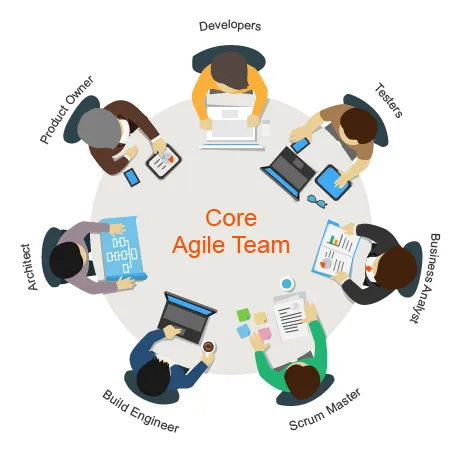
Nyla Development Agile Team

ประสบการณ์ด้าน Internet, Website, Mobile Application กว่า 20 ปี

ทีมงาน Nyla มีประสบการ์ทางด้าน Computer, Internet, Website, Web Application, Mobile Application กว่า 20 ปีทำให้ท่านมั่นใจในผลงานที่ตอบโจทย์ความต้องการของท่าน

มาตราฐานการทำงาน

ใช้ระบบบริหารงานแบบ Agile โดยทีมทำงานมุ่งเน้นประสิทธิภาพและผลลัพธ์

Technology ที่ทันสมัยเหมาะสมกับความต้องการของท่าน

ด้วยประสบการณ์กว่า 20 ปีของเราสามารถแนะนำ Technology ใหม่ๆ ที่เหมาะสมกับงานของท่าน เพื่อประสิทธิภาพที่ดีเยี่ยมและทันสมัย

Our Company

Nyla-dev is specializes in developing websites and mobile applications is a full-service digital agency that provides a wide range of services to help businesses establish and maintain a strong online presence. These services can include website design and development, mobile app development, search engine optimization (SEO), social media marketing, and online advertising.

Such a company typically employs a team of experts in various fields, including web and mobile development, design, and digital marketing. These experts work together to understand the specific needs and goals of a business, and then create a customized solution to help the business achieve its objectives.

The process of working with a digital agency for website and mobile app development typically begins with a consultation, during which the agency's experts will gather information about the business and its target audience, as well as the business's goals and objectives. This information is used to create a detailed project plan and wireframe, which outlines the features and functionality of the website or mobile app.

Next, the design and development of the website or mobile app takes place. The agency's designers and developers will work together to create a visually appealing and user-friendly interface, while ensuring that the website or mobile app is optimized for search engines and mobile devices.

Once the website or mobile app is complete, it must be tested on various devices and web browsers to ensure compatibility and fix any bugs. The agency will also provide training and support to ensure that the business is able to effectively manage and maintain the website or mobile app.

Overall, working with a digital agency that specializes in website and mobile app development can be an effective way for businesses to establish and maintain a strong online presence. The agency's experts will provide a wide range of services to help the business achieve its objectives, while ensuring that the website or mobile app is visually appealing, user-friendly, and optimized for search engines and mobile devices.

Software Development

Software development is a rapidly evolving field that requires a combination of technical and soft skills. To be a professional in this field, one must possess the following traits:

  1. Technical skills: Stay current with the latest technologies and programming languages, and continuously improve your problem-solving and coding abilities.
  2. Attention to detail: Ensure that the software you produce is error-free and meets the requirements of the client or end-user.
  3. Communication skills: Effectively communicate with team members, clients, and stakeholders to ensure the software development process runs smoothly.
  4. Collaboration skills: Work well in a team and contribute to a positive team dynamic by sharing ideas, feedback, and constructive criticism.
  5. Adaptability: Be open to new technologies, approaches, and methodologies, and be willing to continuously learn and evolve with the field.
  6. Passion for the field: Have a genuine interest in software development and a desire to continuously improve and produce high-quality software.

By possessing these traits, you can become a highly skilled and respected professional in the software development field. It's also important to note that being a professional in software development requires a strong work ethic, dedication, and a commitment to delivering the best possible results.

ลูกค้าของเรา

Amazing Christmas
ไทยประกันชีวิต
Supper Rich
หมูกมล
WISP Internet
PICO
PTT GC

Language, Framework, Tools

HTML
CSS
JS
TS
nodejs
Laravel
Dart Language
Flutter
React
Android
VS Code
X Code

บทความล่าสุด

The Digital Trinity: Computers, Internet, and the Dawn of AI

In the span of a few decades, humanity has witnessed a technological revolution unlike any before. At its heart lies the symbiotic relationship between computers, the internet, and the rapidly evolving field of artificial intelligence (AI). Computers, once mere calculating machines, have become indispensable tools, driving innovation across every sector. Their processing power and storage capabilities have enabled us to tackle complex problems, analyze vast datasets, and create intricate digital worlds. The internet, in turn, has acted as the great connector, weaving these individual computational powerhouses into a global network. It has democratized information, facilitated unprecedented communication, and fostered collaboration on a scale previously unimaginable. From instant messaging to e-commerce, the internet has fundamentally reshaped how we live, work, and interact. Now, standing at the precipice of a new era, artificial intelligence is emerging as the transformative force that leverages the power of computers and the connectivity of the internet. AI, through machine learning, deep learning, and natural language processing, is enabling machines to learn, reason, and even create. This is no longer science fiction; AI is powering everything from personalized recommendations and voice assistants to sophisticated medical diagnostics and autonomous vehicles. The synergy between these three elements is profound. Computers provide the hardware foundation, the internet offers the communication infrastructure, and AI represents the intelligence that unlocks their full potential. As these technologies continue to advance, their integration will undoubtedly lead to further disruptions and opportunities, challenging our understanding of what is possible and shaping the future of human civilization.

The Transformative Trio: Computers, the Internet, and AI

In the blink of an eye, our world has been reshaped by the relentless evolution of computing, the boundless connectivity of the internet, and the burgeoning intelligence of artificial intelligence (AI). These three pillars, deeply intertwined, have moved from the realm of science fiction to become integral components of our daily lives, driving innovation, transforming industries, and fundamentally altering human interaction. Computers, once room-sized behemoths, have shrunk to fit our pockets, yet their processing power has exploded exponentially. This miniaturization and enhancement have democratized access to information and computational tools, empowering individuals and businesses alike. From spreadsheets and word processors to complex simulations and creative design software, computers are the bedrock upon which modern productivity and innovation are built. The internet, a global network of interconnected computers, has dissolved geographical barriers and revolutionized communication and information dissemination. It has fostered a digital commons, enabling instant access to knowledge, fostering global collaboration, and creating entirely new economies. E-commerce, social media, streaming services, and remote work are all testaments to the internet's profound impact on how we live, work, and play. Artificial Intelligence, the current frontier of technological advancement, builds upon the foundation laid by computers and the internet. AI systems, capable of learning, problem-solving, and decision-making, are no longer confined to academic research. They are powering everything from personalized recommendations and autonomous vehicles to advanced medical diagnostics and scientific discovery. Machine learning, deep learning, and natural language processing are rapidly advancing, promising to further augment human capabilities and address some of the world's most complex challenges. The synergy between these three forces is undeniable. Powerful computers are essential for training complex AI models. The internet provides the vast datasets necessary for AI to learn and the infrastructure for AI-driven services to be delivered globally. AI, in turn, is optimizing internet operations, personalizing user experiences, and creating new frontiers for computational exploration. As these technologies continue to evolve in parallel, their combined impact will undoubtedly be even more profound, shaping the future in ways we are only beginning to comprehend.

The Interconnected Evolution: Computers, the Internet, and the Dawn of AI

The journey of computing from rudimentary mechanical devices to the omnipresent digital ecosystem we inhabit today is a story of relentless innovation. At its core lies the computer, a machine that has continuously redefined its capabilities, from simple calculation to complex data processing. The invention of the transistor and subsequent microprocessors dramatically shrunk the size and increased the power of computers, paving the way for personal computing. However, the true revolution began with the advent of the Internet. This global network of interconnected computers shattered geographical barriers, enabling instantaneous communication and unprecedented access to information. The Internet transformed how we work, learn, socialize, and consume, creating a digitally interconnected world. From email and the World Wide Web to streaming media and e-commerce, its impact is undeniable. Now, we stand at the precipice of another monumental shift with the rise of Artificial Intelligence (AI). AI, drawing upon the vast computational power of modern computers and the data-rich environment of the Internet, aims to imbue machines with intelligence. Machine learning, deep learning, and natural language processing are enabling AI systems to perform tasks that were once exclusively human domains, such as image recognition, complex problem-solving, and creative content generation. The synergy between these three pillars – computers, the Internet, and AI – is not just a technological progression; it's a fundamental reshaping of our society and our future.

The Symbiotic Evolution of Computers, the Internet, and AI

In the grand tapestry of technological advancement, few threads are as intricately interwoven and mutually reinforcing as computers, the internet, and artificial intelligence (AI). Their individual breakthroughs have been remarkable, but their combined evolution has reshaped our world at an unprecedented pace. Computers, in their nascent stages, were colossal machines performing specific calculations. The advent of personal computers democratized computing power, bringing it from specialized labs into homes and offices. This proliferation laid the groundwork for widespread digital interaction. The internet then emerged as the connective tissue, enabling these disparate computers to communicate and share information globally. The World Wide Web transformed this connectivity into a vast repository of knowledge, commerce, and social interaction. It created a digital commons, a space where ideas could spread instantaneously and collaborations could transcend geographical boundaries. Artificial intelligence, once a theoretical pursuit, has now become a tangible force, propelled by the sheer computational power of modern computers and the immense datasets made accessible by the internet. AI algorithms, from machine learning to deep learning, are capable of recognizing patterns, making predictions, and even generating creative content. They are no longer confined to academic research; they are embedded in our daily lives – powering search engines, personal assistants, recommendation systems, and increasingly, sophisticated analytical tools. The relationship is symbiotic: powerful computers are essential for training and running complex AI models. The internet provides the vast quantities of data needed to fuel AI's learning process and a platform for AI-driven services to be delivered to users. In turn, AI is optimizing computer hardware and software, and the internet itself is becoming more intelligent and personalized through AI applications. Looking ahead, this intertwined evolution promises even more profound transformations. We are on the cusp of a new era where AI will augment human capabilities, drive scientific discovery, and revolutionize industries. The continued development of more powerful, efficient computers and a more pervasive, intelligent internet will undoubtedly accelerate AI's progress, creating a future that is both exciting and challenging to imagine.

The Triad of Transformation: Computers, the Internet, and AI

In the landscape of human innovation, few forces have been as profoundly transformative as the confluence of computers, the internet, and artificial intelligence (AI). These three pillars have not only reshaped our daily lives but have also fundamentally altered the trajectory of society, industry, and knowledge itself. Computers, initially conceived as mere calculating machines, have evolved into ubiquitous tools that permeate every facet of modern existence. From the smartphones in our pockets to the supercomputers powering scientific research, they are the engines of our digital age. Their ever-increasing processing power and decreasing costs have democratized access to information and computation, laying the groundwork for further advancements. The internet, a global network of interconnected computers, has revolutionized communication, commerce, and information dissemination. It has shrunk the world, enabling instant connections across continents, fostering new forms of social interaction, and creating unprecedented opportunities for learning and collaboration. The vast repositories of data and the ability to share them instantaneously are the fuel for the next stage of our digital evolution. Artificial Intelligence, the latest frontier in this technological triad, represents the aspiration to imbue machines with human-like cognitive abilities. AI encompasses machine learning, natural language processing, computer vision, and robotics, enabling systems to learn, reason, problem-solve, and even create. Its applications are rapidly expanding, from personal assistants and autonomous vehicles to sophisticated medical diagnostics and scientific discovery. The synergy between these three elements is where true magic happens. Computers provide the hardware, the internet provides the connectivity and data, and AI provides the intelligence. This powerful combination is driving innovation at an exponential rate, creating a feedback loop where each advancement fuels the next. We are witnessing the birth of a new era, one defined by intelligent systems, interconnectedness, and the boundless potential of computational power. Understanding and navigating this evolving landscape is crucial for individuals, businesses, and governments alike as we shape our collective future.

The Transformative Trinity: Computers, the Internet, and AI

In the annals of human progress, few advancements have reshaped our world as profoundly and rapidly as the interconnected forces of computers, the internet, and artificial intelligence (AI). These three pillars of the digital age have moved from niche technologies to the very fabric of our daily lives, revolutionizing communication, commerce, education, and virtually every other facet of society. Computers, once bulky machines confined to research labs, are now ubiquitous. From the smartphones in our pockets to the vast server farms powering global networks, they have become indispensable tools for processing information, automating tasks, and enabling complex calculations. Their miniaturization and increasing power have democratized access to computational resources, empowering individuals and organizations alike. The internet, a global network of interconnected computers, has amplified the power of individual machines exponentially. It has dissolved geographical barriers, allowing for instantaneous communication and the free flow of information across the planet. The internet has birthed entirely new industries, transformed traditional ones, and created unprecedented opportunities for collaboration and knowledge sharing. It has become the primary conduit for commerce, entertainment, and social interaction. Artificial intelligence, the most recent and arguably the most disruptive of the three, represents the ability of machines to perform tasks that typically require human intelligence. From understanding natural language and recognizing patterns to making decisions and solving problems, AI is rapidly evolving. Machine learning, a subset of AI, allows systems to learn from data without explicit programming, leading to increasingly sophisticated applications. AI is being integrated into everything from search engines and recommendation systems to autonomous vehicles and medical diagnostics. The synergy between these three forces is what truly unlocks their potential. Computers provide the computational power, the internet provides the connectivity, and AI provides the intelligence. This powerful trinity is not just changing how we do things; it's changing what is possible. As these technologies continue to advance, we can expect even more profound shifts, posing both exciting opportunities and significant challenges for humanity to navigate.

The Symbiotic Revolution: Computers, Internet, and the Rise of AI

The interconnected triad of computers, the internet, and artificial intelligence (AI) represents a paradigm shift in human history, fundamentally altering how we live, work, and interact. Computers, initially rudimentary calculating machines, have evolved into powerful processors capable of handling immense datasets and executing complex instructions. This exponential growth in computational power laid the groundwork for the next crucial element: the internet. The internet, a global network of interconnected computers, shattered geographical barriers, enabling instantaneous communication and access to an unprecedented volume of information. It democratized knowledge, fostered collaboration, and created new economic opportunities. The vast digital ocean of data generated by the internet became the fuel for AI. Artificial intelligence, at its core, is the ability of machines to perform tasks that typically require human intelligence, such as learning, problem-solving, decision-making, and perception. Fueled by the massive datasets harvested from the internet and processed by increasingly powerful computers, AI has moved from theoretical concept to practical application. Machine learning algorithms can now identify patterns, predict outcomes, and even generate creative content with remarkable accuracy. From personalized recommendations and virtual assistants to autonomous vehicles and advanced medical diagnostics, AI is weaving itself into the fabric of our daily lives. The synergy between these three technologies is undeniable. Computers provide the hardware, the internet provides the connectivity and data, and AI provides the intelligence. This symbiotic relationship continues to drive innovation at a breathtaking pace. As AI becomes more sophisticated, it will further refine our computing capabilities and expand the possibilities of the internet, leading to a future that is both exciting and, at times, a little daunting. Understanding this interconnected evolution is key to navigating the opportunities and challenges ahead.

The Intertwined Revolution: Computers, the Internet, and the Dawn of AI

The modern world as we know it is an intricate tapestry woven from threads of computation, connectivity, and burgeoning artificial intelligence. From their humble beginnings as mechanical calculators, computers have undergone a breathtaking evolution, miniaturizing and exponentially increasing in power. This relentless progress laid the groundwork for the second pivotal element: the Internet. The Internet, a global network of interconnected computers, has democratized information, facilitated instant communication, and fostered unprecedented collaboration. It has reshaped industries, altered social interactions, and become an indispensable tool for billions. Now, we stand at the precipice of another transformative era, driven by Artificial Intelligence (AI). AI, the ability of machines to perform tasks that typically require human intelligence, is rapidly advancing, fueled by the vast datasets and processing power made available by computers and the Internet. Machine learning algorithms are learning from experience, natural language processing is enabling more intuitive human-computer interaction, and computer vision is allowing machines to 'see' and interpret the world. The synergy between these three forces – computers, the Internet, and AI – is not merely additive; it's multiplicative. AI systems rely on powerful computers for their processing needs and leverage the vast interconnectedness of the Internet for data acquisition and dissemination. In turn, AI promises to enhance computing capabilities, optimize internet infrastructure, and unlock new frontiers of human endeavor, from personalized medicine and autonomous vehicles to scientific discovery and creative expression. Understanding this interconnected revolution is crucial for navigating the opportunities and challenges that lie ahead.