Nyla ที่ปรึกษามืออาชีพด้านเว็บไซต์, โมบายแอปพลิเคชัน, เครือข่าย และอินเทอร์เน็ต พร้อมให้บริการพัฒนา Digital Production ครบวงจร ตั้งแต่การออกแบบ พัฒนา ไปจนถึงการดูแลระบบ เพื่อเสริมสร้างธุรกิจของคุณให้ก้าวล้ำในยุคดิจิทัล

Website

บริการออกแบบ Website และ Application โดยทีมงานมืออาชีพทางด้านการออกแบบ Website และ UX/UI ให้เหมาะสมกับภาพลักษณ์ธุรกิจของท่าน


More detail

Web Application

จัดทำ Web Application ให้เหมาะสมกับธุรกิจของท่าน ไม่ว่าจะเป็นระบบสมาชิก ระบบ Cetalog สินค้า ระบบสินค้าคงคลัง หรือระบบที่ท่านต้องการ


More detail

Mobile Application

พัฒนาโดย Flutter ทำให้ท่านสามารถใช้ได้ทั้งระบบ Android และ IOS โดยการทำพัฒนาเพียงครั้งเดียว ตามความต้องการของลูกค้าและ UX/UI ที่สวยงาม


More detail

Solution Development

เหมาะสำหรับธุรกิจของลูกค้าไม่ว่าจะเป็นทางด้านระบบ Network, ระบบ Server ทั้ง Linux และ Windows, IOT รวมถึงระบบ Hardware ต่างๆ


More detail

Nyla Development Team มีเป้าหมายเพื่อสร้างความสำเร็จให้เกิดขึ้นกับธุรกิจของท่าน ด้วยการทำงานอย่างมีประสิทธิภาพในทุกขั้นตอน
และเชื่อมั่นว่าหากลูกค้ามีความก้าวหน้า เราเองก็จะพัฒนาเคียงข้างไปด้วยกัน

Nyla Development
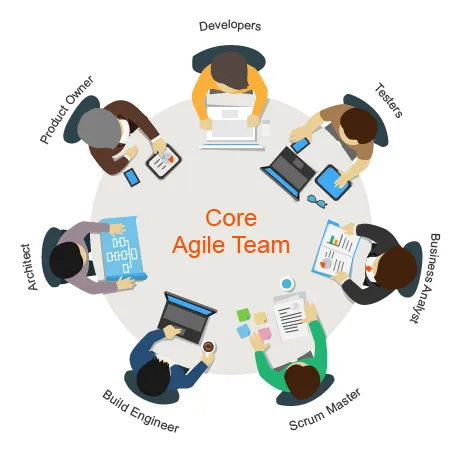
Nyla Development Agile Team

ประสบการณ์ด้าน Internet, Website, Mobile Application กว่า 20 ปี

ทีมงาน Nyla มีประสบการ์ทางด้าน Computer, Internet, Website, Web Application, Mobile Application กว่า 20 ปีทำให้ท่านมั่นใจในผลงานที่ตอบโจทย์ความต้องการของท่าน

มาตราฐานการทำงาน

ใช้ระบบบริหารงานแบบ Agile โดยทีมทำงานมุ่งเน้นประสิทธิภาพและผลลัพธ์

Technology ที่ทันสมัยเหมาะสมกับความต้องการของท่าน

ด้วยประสบการณ์กว่า 20 ปีของเราสามารถแนะนำ Technology ใหม่ๆ ที่เหมาะสมกับงานของท่าน เพื่อประสิทธิภาพที่ดีเยี่ยมและทันสมัย

Our Company

Nyla-dev is specializes in developing websites and mobile applications is a full-service digital agency that provides a wide range of services to help businesses establish and maintain a strong online presence. These services can include website design and development, mobile app development, search engine optimization (SEO), social media marketing, and online advertising.

Such a company typically employs a team of experts in various fields, including web and mobile development, design, and digital marketing. These experts work together to understand the specific needs and goals of a business, and then create a customized solution to help the business achieve its objectives.

The process of working with a digital agency for website and mobile app development typically begins with a consultation, during which the agency's experts will gather information about the business and its target audience, as well as the business's goals and objectives. This information is used to create a detailed project plan and wireframe, which outlines the features and functionality of the website or mobile app.

Next, the design and development of the website or mobile app takes place. The agency's designers and developers will work together to create a visually appealing and user-friendly interface, while ensuring that the website or mobile app is optimized for search engines and mobile devices.

Once the website or mobile app is complete, it must be tested on various devices and web browsers to ensure compatibility and fix any bugs. The agency will also provide training and support to ensure that the business is able to effectively manage and maintain the website or mobile app.

Overall, working with a digital agency that specializes in website and mobile app development can be an effective way for businesses to establish and maintain a strong online presence. The agency's experts will provide a wide range of services to help the business achieve its objectives, while ensuring that the website or mobile app is visually appealing, user-friendly, and optimized for search engines and mobile devices.

Software Development

Software development is a rapidly evolving field that requires a combination of technical and soft skills. To be a professional in this field, one must possess the following traits:

  1. Technical skills: Stay current with the latest technologies and programming languages, and continuously improve your problem-solving and coding abilities.
  2. Attention to detail: Ensure that the software you produce is error-free and meets the requirements of the client or end-user.
  3. Communication skills: Effectively communicate with team members, clients, and stakeholders to ensure the software development process runs smoothly.
  4. Collaboration skills: Work well in a team and contribute to a positive team dynamic by sharing ideas, feedback, and constructive criticism.
  5. Adaptability: Be open to new technologies, approaches, and methodologies, and be willing to continuously learn and evolve with the field.
  6. Passion for the field: Have a genuine interest in software development and a desire to continuously improve and produce high-quality software.

By possessing these traits, you can become a highly skilled and respected professional in the software development field. It's also important to note that being a professional in software development requires a strong work ethic, dedication, and a commitment to delivering the best possible results.

ลูกค้าของเรา

Amazing Christmas
ไทยประกันชีวิต
Supper Rich
หมูกมล
WISP Internet
PICO
PTT GC

Language, Framework, Tools

HTML
CSS
JS
TS
nodejs
Laravel
Dart Language
Flutter
React
Android
VS Code
X Code

บทความล่าสุด

The Unstoppable Triumvirate: Computers, the Internet, and AI

The confluence of computers, the internet, and artificial intelligence (AI) has fundamentally reshaped our world, driving unprecedented innovation and transforming nearly every facet of human existence. Computers, once mere calculating machines, have evolved into powerful and ubiquitous tools. Their increasing processing power, miniaturization, and affordability have put them into the hands of billions, enabling complex tasks and facilitating access to information. The internet, a global network of interconnected computers, acts as the nervous system of this digital revolution. It has democratized information, allowing for instant communication, global commerce, and the creation of vast online communities. The internet has broken down geographical barriers, fostering collaboration and enabling the rapid dissemination of knowledge and ideas. Artificial intelligence, the most recent and perhaps most impactful development of the three, represents the ability of machines to perform tasks that typically require human intelligence. From machine learning algorithms that personalize our online experiences to advanced natural language processing that allows us to converse with devices, AI is rapidly becoming integrated into our daily lives. AI's potential to solve complex problems, automate processes, and even drive scientific discovery is immense. The synergy between these three pillars – the computational power of computers, the connectivity of the internet, and the intelligence of AI – promises a future filled with possibilities, but also raises important questions about ethics, privacy, and the future of work.

The Digital Trinity: Computers, the Internet, and the Dawn of AI

We live in an era profoundly shaped by the interconnected forces of computers, the internet, and the burgeoning field of Artificial Intelligence (AI). These three pillars have not only revolutionized how we live, work, and communicate but are also converging to unlock unprecedented possibilities and challenges for the future. Computers, from the humble personal desktop to the colossal supercomputers powering scientific research, form the foundational hardware. They are the engines of computation, processing vast amounts of data and executing complex instructions. Without their ever-increasing power and miniaturization, the subsequent revolutions would have been impossible. The internet, a global network of interconnected computers, then emerged as the universal conduit. It shattered geographical barriers, enabling instantaneous communication, access to an unfathomable ocean of information, and the creation of entirely new industries and social structures. From e-commerce and social media to cloud computing and remote collaboration, the internet has woven itself into the fabric of modern life. Now, Artificial Intelligence stands as the intelligence layer atop this digital infrastructure. AI, through machine learning, deep learning, and other advanced techniques, empowers computers to learn from data, identify patterns, make predictions, and even generate novel content. AI is no longer a futuristic concept; it's embedded in our smartphones, powering search engines, driving recommendation algorithms, assisting in medical diagnoses, and even creating art and music. The synergy between these three elements is transformative. Powerful computers, connected by the internet, provide the necessary infrastructure and data for AI to thrive. AI, in turn, enhances the capabilities of computers and the internet, making them more intelligent, efficient, and personalized. This digital trinity is a powerful engine for innovation, driving progress in fields ranging from healthcare and education to transportation and climate science. However, this rapid advancement also brings critical considerations. Ethical implications of AI, data privacy concerns amplified by the internet, and the societal impact of increasing automation necessitate careful consideration and proactive development of responsible frameworks. As we continue to navigate the evolving landscape of computers, the internet, and AI, understanding their interplay is crucial for harnessing their immense potential while mitigating their risks.

The Digital Trinity: Computers, the Internet, and the Dawn of AI

In the grand narrative of human progress, few forces have been as transformative as the intertwined evolution of computers, the internet, and the burgeoning field of Artificial Intelligence (AI). These three pillars have not only reshaped our daily lives but are actively redefining the very fabric of society, economy, and our understanding of intelligence itself. Computers, once room-sized behemoths for scientific calculation, have shrunk to fit our pockets, empowering billions with unprecedented computational power. This miniaturization and proliferation have fueled innovation across every sector, from medicine and manufacturing to entertainment and communication. They are the fundamental engines that drive our digital world. The internet, the global network connecting these computational devices, has dissolved geographical barriers and democratized access to information and interaction. It has fostered a global village, enabling instant communication, collaborative endeavors, and the vast dissemination of knowledge. The internet is the nervous system of our interconnected planet. Now, standing on the shoulders of these two giants, Artificial Intelligence is emerging as the intellect of the digital age. AI, in its various forms – machine learning, natural language processing, computer vision – is enabling machines to perform tasks that traditionally required human intelligence. From personalized recommendations and autonomous vehicles to sophisticated scientific discovery and creative content generation, AI is moving from theoretical possibility to practical reality. The synergy between computers and the internet provides the raw data and computational power necessary for AI to learn and grow. As AI systems become more sophisticated, they, in turn, enhance the capabilities of computers and create new possibilities for the internet, forming a virtuous cycle of innovation. However, this digital trinity also presents profound challenges. Questions of privacy, data security, ethical deployment of AI, and the impact on employment are paramount. Navigating this new landscape requires careful consideration, robust regulation, and a commitment to harnessing these powerful tools for the benefit of all humanity. The future is being written, and the story of computers, the internet, and AI is far from over.

The Intertwined Revolution: Computers, the Internet, and the Dawn of AI

The 20th and 21st centuries have been irrevocably shaped by a triad of technological marvels: computers, the internet, and artificial intelligence (AI). These forces are not independent entities but rather a deeply interconnected ecosystem, each fueling and accelerating the development of the others. Computers, the foundational bedrock, have evolved from colossal room-sized machines to ubiquitous personal devices. Their ever-increasing processing power and miniaturization have enabled us to tackle complex problems, manage vast datasets, and automate countless tasks. Without the computational power provided by modern computers, the very concept of a global network like the internet would be unfeasible. The internet, in turn, has democratized access to information and communication on an unprecedented scale. It acts as a colossal nervous system, connecting billions of computers and facilitating the instantaneous exchange of data. This global connectivity is crucial for the development and deployment of AI. AI models are trained on massive datasets, often residing on distributed servers across the internet. Furthermore, the internet allows AI to be accessible and useful to individuals and organizations worldwide, powering everything from search engines and social media algorithms to sophisticated scientific research tools and autonomous systems. Artificial intelligence, the current frontier, represents the culmination of these advancements. AI systems are designed to mimic cognitive functions such as learning, problem-solving, and decision-making. The availability of powerful computers and the vast repositories of data accessible via the internet are the essential ingredients for training and refining AI algorithms. As AI becomes more sophisticated, it, in turn, drives innovation in computer hardware (e.g., specialized AI chips) and further expands the capabilities and applications of the internet. This symbiotic relationship promises a future where these technologies continue to push the boundaries of what is possible, transforming industries, societies, and our understanding of intelligence itself.

The Triad of Modernity: Computers, the Internet, and AI

In the span of a few decades, humanity has witnessed a technological revolution unparalleled in its speed and scope. At the heart of this transformation lie three interconnected pillars: computers, the internet, and artificial intelligence (AI). These forces have not only reshaped industries and economies but have fundamentally altered the way we live, work, and interact with the world. Computers, once room-sized behemoths, have shrunk to fit into our pockets, becoming ubiquitous tools for communication, computation, and creativity. Their relentless advancement in processing power, storage capacity, and miniaturization has fueled innovation across every field. From scientific research and financial markets to entertainment and personal productivity, computers are the engines driving progress. The internet, a global network connecting billions of devices, has democratized information and fostered unprecedented connectivity. It has erased geographical boundaries, enabling instant communication, collaborative endeavors, and access to a vast repository of knowledge. The rise of e-commerce, social media, and cloud computing are direct consequences of this interconnected digital landscape. Artificial intelligence, the most recent and perhaps most profound development in this triad, represents the ambition to imbue machines with human-like cognitive abilities. AI, powered by vast datasets processed by sophisticated algorithms, is no longer confined to science fiction. It is actively transforming healthcare through diagnostic tools, optimizing logistics with predictive analytics, personalizing customer experiences, and driving autonomous systems. As AI capabilities continue to expand, its potential to solve complex global challenges and unlock new avenues of human achievement is immense. These three elements are not independent entities but rather form a symbiotic relationship. Computers provide the hardware and processing power, the internet offers the connectivity and data infrastructure, and AI leverages both to learn, adapt, and perform tasks. The future promises an even deeper integration, with AI becoming increasingly embedded within our computing devices and the internet evolving into a more intelligent and responsive network. Understanding this dynamic interplay is crucial for navigating the opportunities and challenges of our increasingly digital and intelligent world.

The Symbiotic Revolution: Computers, the Internet, and the Dawn of AI

The intertwined evolution of computers, the internet, and artificial intelligence (AI) represents one of the most profound transformations in human history. Initially conceived as mere calculating machines, computers rapidly evolved, becoming the bedrock of our digital age. Their increasing power and accessibility paved the way for the interconnectedness that the internet provides. This global network of networks, initially a tool for academic and military communication, has since blossomed into an indispensable infrastructure for commerce, social interaction, and information dissemination. The internet, in turn, has become the fertile ground upon which AI is rapidly developing and deploying. Vast datasets, generated and shared across the internet, are the essential fuel for training sophisticated AI models. From humble beginnings in rule-based systems, AI has progressed to machine learning and deep learning, capable of learning from experience and performing complex tasks that were once the exclusive domain of human intellect. These advancements are now permeating every facet of our lives, from personalized recommendations and autonomous vehicles to medical diagnosis and scientific discovery. The synergy between these three forces is undeniable. Computers provide the processing power, the internet provides the connectivity and the data, and AI provides the intelligence that analyzes, interprets, and acts upon this information. This symbiotic relationship is not merely technological; it is reshaping societies, economies, and our understanding of what is possible. As we navigate this ongoing revolution, understanding the interplay between computers, the internet, and AI is crucial for harnessing their potential and addressing the ethical and societal challenges they present.

The Transformative Trinity: Computers, Internet, and AI

The relentless march of technological progress has been most profoundly shaped by the interplay of three fundamental forces: computers, the internet, and artificial intelligence (AI). These pillars, individually powerful, have become exponentially more impactful when interwoven, fundamentally reshaping how we live, work, and interact with the world. Computers, in their nascent stages, were tools for complex calculation. Today, they are ubiquitous, from the palm of our hands to vast data centers. They are the engines of the digital age, processing information, running applications, and powering every facet of our modern lives. Without the relentless miniaturization and increasing power of computing hardware, the subsequent revolutions would have been impossible. The internet, a global network of interconnected computers, provided the communication infrastructure. It democratized access to information, enabled instant global connectivity, and fostered new forms of social interaction and commerce. From email and websites to social media and streaming services, the internet has dissolved geographical barriers and created a truly interconnected planet. Artificial intelligence, the latest in this triumvirate, represents the ability of machines to perform tasks that typically require human intelligence. This includes learning, problem-solving, decision-making, and perception. AI, fueled by the vast datasets generated by computers and transmitted via the internet, is now capable of automating complex processes, analyzing massive amounts of data for insights, and even creating novel content. Machine learning, deep learning, and natural language processing are just a few of the AI subfields that are rapidly advancing. Together, these three elements form a symbiotic relationship. Computers provide the processing power for AI algorithms. The internet facilitates the collection of data and the deployment of AI services. AI, in turn, enhances the capabilities of both computers and the internet, making them more intelligent, efficient, and personalized. We see this in everything from smart assistants and recommendation engines to autonomous vehicles and advanced scientific research. The future promises even more profound integration, with AI driving the next wave of innovation in computing and expanding the possibilities of the internet in ways we are only beginning to imagine.

The Converging Forces: Computers, the Internet, and the Rise of AI

The modern world is fundamentally shaped by the symbiotic relationship between computers, the internet, and the burgeoning field of Artificial Intelligence (AI). These three pillars of technological advancement have not only revolutionized how we live, work, and interact but are now merging in profound ways, promising further transformative changes. Computers, from their humble beginnings as complex calculating machines, have evolved into ubiquitous devices. Their ever-increasing processing power, miniaturization, and accessibility have laid the groundwork for innovation. Every smartphone, laptop, and server humming in data centers is a testament to decades of relentless progress in hardware and software engineering. The internet, a global network connecting these billions of computers, has democratized information and facilitated unprecedented communication. It has dissolved geographical boundaries, enabling real-time collaboration, instant access to knowledge, and the creation of vast digital marketplaces. The internet acts as the nervous system of our interconnected world, carrying data at astonishing speeds. Artificial Intelligence, once a concept confined to science fiction, is now a tangible reality. AI refers to the development of computer systems capable of performing tasks that typically require human intelligence, such as learning, problem-solving, decision-making, and perception. Machine learning, a subset of AI, allows systems to learn from data without explicit programming, driving advancements in areas like image recognition, natural language processing, and predictive analytics. The true power, however, lies in their convergence. The internet provides the massive datasets that AI algorithms need to learn and improve. Powerful computers are essential for training complex AI models and running sophisticated applications. In turn, AI is enhancing the internet by personalizing user experiences, improving search relevance, and powering intelligent agents that can understand and respond to human language. From recommendation engines on streaming services to sophisticated fraud detection systems and autonomous vehicles, AI is increasingly woven into the fabric of our online and offline lives, driven by the computing power and connectivity the internet provides.